When your furnace stops working the way it should, the situation can feel stressful. The house gets cold, the air feels uneven, and there is always that uncomfortable question. Should you repair the furnace, or is it finally time to replace it?
The goal of this guide is to remove the guesswork. You will learn how technicians make this decision, what signs to look for, how age and cost affect the outcome, and how to make a choice that supports comfort, safety, and long-term savings.
Many homeowners believe the only factor that matters is age. While age is important, it is not the whole story.
The real answer comes from a combination of system performance, repair history, safety concerns, energy use, and what your home actually needs. By the end of this guide, you should feel confident discussing your options with any home service professional.
Key Takeaways
- Furnace age affects performance and repair needs.
- Small repairs can extend the life of a furnace.
- Replace if repair costs exceed 30% of new system cost.
- Safety issues like cracked heat exchangers require replacement.
- Rising energy bills signal inefficient furnace performance.
- Frequent breakdowns indicate it may be time for a replacement.
- Regular maintenance helps maximize furnace lifespan and efficiency.
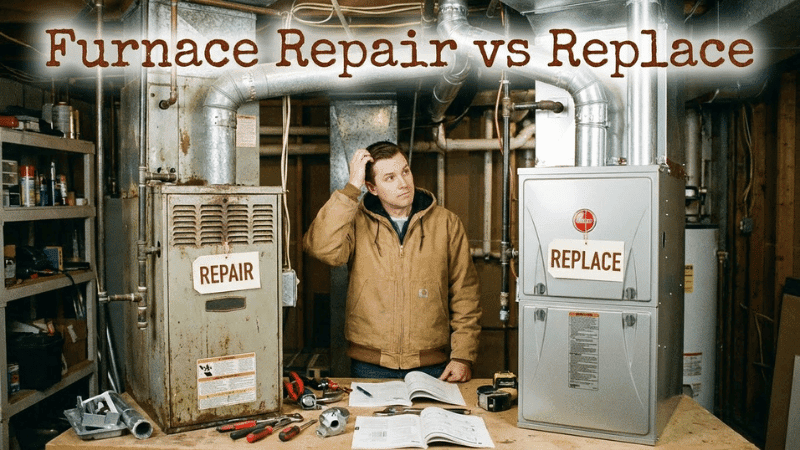
Furnace Repair vs Replace
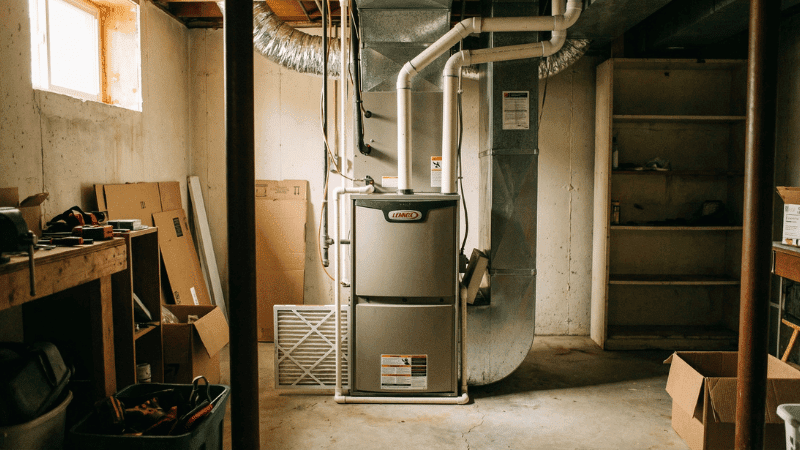
Deciding between furnace repair and replacement hinges on age, cost, efficiency, and safety, with a common guideline being the $5,000 rule (age x repair cost) or the 50% rule (repair cost vs. new unit cost); if your furnace is over 15 years old, needs frequent fixes, or emits carbon monoxide (yellow flame, soot), replacement is often better for safety and long-term savings, while minor fixes on a newer, efficient unit favor repair.
A Simple Comparison to Start
This table gives a quick reference before we go any further.
| Situation | Repair Makes Sense | Replacement Makes Sense |
|---|---|---|
| Age | Under 10 years | Over 15 years |
| Cost | Low, predictable, and minor | More than 30 percent of the cost of a new furnace |
| Repair frequency | Rare issues | Multiple calls per season |
| Energy bills | Stable | Climbing month after month |
| Comfort | Even heating | Hot and cold spots |
| Safety | No concerns | Cracked heat exchanger or failing burner system |
Now, let us break this down in depth so you can judge your own situation clearly and confidently.
Why Furnace Age Matters, but Not as Much as You Think
Most furnaces last 15 to 20 years. That does not mean they fail the moment they pass year fifteen, and it also does not mean every ten year old furnace deserves to be repaired. Age simply tells you the likelihood of future problems.
A furnace under ten years old usually has many years of service left. Repairs tend to be simple and affordable. Components such as flame sensors, igniters, or blower motors sometimes wear down early, but these are manageable issues.
A furnace older than fifteen years becomes a financial balancing act. Older systems lose efficiency, need more maintenance, and carry a higher risk of sudden failure during the coldest days of the year. Even if the repair is possible, you must ask whether it makes sense to put money into a system that is already close to the end of its usable life.
Age is a clue. It is not a full diagnosis.
Repair Costs vs Replacement Costs
A simple rule used by many home service experts is the thirty percent rule. If the cost to repair the furnace is more than thirty percent of the cost of a new unit, replacement becomes the better financial choice. This protects you from throwing money into a system that will continue to decline.
For example:
- If the repair is one hundred to three hundred dollars, repair is usually the smart move.
- If the repair is seven hundred to twelve hundred dollars, you must consider age, safety, and the history of the system.
- If the repair reaches eighteen hundred dollars or more, replacement is often the clear winner.
The goal is long term value, not the lowest upfront price.
The Role of Repair History
A single breakdown is not a red flag. Every mechanical system eventually needs service. The real warning sign is repeated breakdowns. If you have called a technician two or more times in the same season, that suggests deeper issues.
Maybe the heat exchanger has stress cracks forming. Maybe the blower is struggling because the motor is worn. Maybe poor airflow is forcing the system to work harder than it should. When problems repeat, it tells you the unit is losing reliability. In that situation, replacement can save money and frustration.
Safety Should Always Be the Deciding Factor
There is one situation where repair is rarely recommended. That situation is a cracked heat exchanger. The heat exchanger separates the combustion gases from the air you breathe. Once it cracks, carbon monoxide can leak into the home. Even a small leak is dangerous.
If a technician identifies a cracked heat exchanger, replacement becomes the responsible and safe choice. Other safety issues, such as repeated flame rollout or major burner failures, can also point toward a replacement.
Safety is more important than budget. It protects your family and your home.
Comfort Problems Are Often a Sign of a Furnace That Is Struggling
Think about the comfort inside your home. Are there hot spots and cold spots? Does the furnace run constantly, only to deliver lukewarm air? Do you feel weak airflow even after changing filters and cleaning vents?
When comfort drops significantly, it usually means the furnace is having trouble moving air or producing heat at the level your home requires. If the system is older, these signs often indicate it can no longer keep up. Repairs can help temporarily, but replacement might be the long term solution.
A comfortable home is not a luxury. It is a basic expectation, especially in the colder months.
Rising Energy Bills Are a Quiet but Important Warning
Most homeowners expect their winter bills to increase a bit, but a sudden or dramatic jump can indicate furnace decline. As systems age, they need more energy to achieve the same temperature. That extra energy translates into higher bills.
If the furnace is older and inefficient, replacing it with a modern high efficiency unit can significantly reduce monthly costs. Over time, the savings can offset the cost of the new furnace.
When Repair Is the Better Decision
Clear and Common Scenarios
Repair is usually the right choice when:
- The furnace is under ten years old.
- The repair is minor and low cost.
- The system rarely breaks down.
- No safety issues are present.
- Energy bills remain stable.
- Comfort is still consistent.
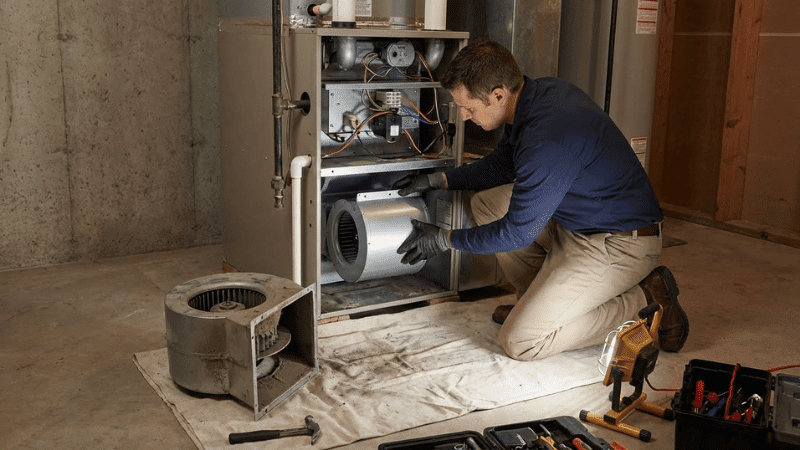
A well maintained furnace can deliver years of dependable service. If the issue is something simple like a blocked sensor, a dirty burner, or a worn belt, a repair restores performance quickly.
When Replacement Delivers More Value and Comfort
Replacement is the better choice when:
- The furnace is over fifteen years old.
- Repairs are happening often.
- The cost of repair is high compared to the price of a new unit.
- Energy bills are rising.
- Comfort problems will not disappear.
- Safety issues exist.
A new furnace offers stronger airflow, better heating, quieter operation, and improved efficiency. It also reduces the stress of constant repairs and gives you peace of mind.
How We Help Homeowners Make the Right Decision (Infographic)
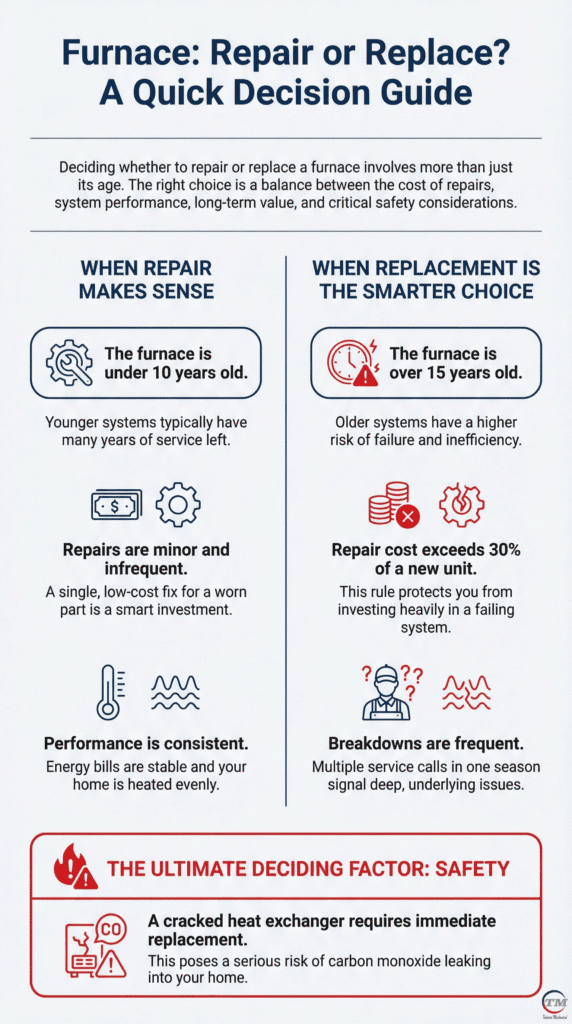
At Tailored Mechanical, we believe in helping our customers make the right decision based on their unique needs.
We will assess your furnace, perform a thorough inspection, and provide you with honest, transparent advice on whether repair or replacement is the best option. We focus on delivering value, comfort, and safety, so you can trust that we’re recommending the solution that fits your home and your budget.
If you’re facing furnace issues, don’t wait until it’s too late. Contact us today for a no-obligation consultation and let us help you make an informed decision for your home’s heating system.
Frequently Asked Questions
How can I tell if my furnace is energy efficient?
To determine if your furnace is energy efficient, check the AFUE (Annual Fuel Utilization Efficiency) rating. Newer models typically have an AFUE rating of 90% or higher. If your furnace is older than 15 years and has a low AFUE rating, upgrading to a new, more efficient system can save you money in the long run.
Will replacing my furnace improve indoor air quality?
Yes, a new furnace can improve indoor air quality, especially if you choose a model with advanced air filtration systems. Newer furnaces are often more effective at maintaining optimal humidity levels and can work better with air purifiers or humidifiers to keep the air cleaner and more comfortable.
Can I finance the cost of a new furnace?
Many HVAC companies offer financing options for furnace replacement. Depending on the provider, you may be able to break the cost of the new system into monthly payments. It’s a good option if you’re not ready for a large upfront investment.
What type of furnace is the best option for my home?
The best type of furnace depends on your home’s size, insulation, and local climate. Common types include gas furnaces, electric furnaces, and oil furnaces. A professional technician can recommend the best unit based on your heating needs and home specifications.
How long does it take to replace a furnace?
On average, replacing a furnace can take anywhere from 4 to 8 hours. The exact time depends on the complexity of the installation, including factors like the furnace type, ductwork, and whether additional modifications are needed.